Monday, 12 November 2012

Research and Planning - Possible Locations

There are a range of locations that are required for my film trailer and I've been working hard to try and find suitable locations. Locations that are necessary are:

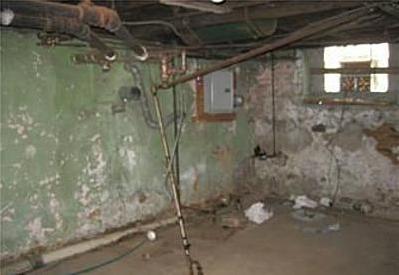
Basement

Woodland area

Grimy bathroom

Phone box (preferably with grass area behind it)

Bedroom

Graveyard
 
Other locations are needed for the fast montage towards the end of the trailer. Locations such as:

Fire escape

House

Church

Bonfire
 
 
So far I have found a suitable woodland area to film in - Gower-Hey Woods, which has a stream running through it, various bridges, plenty of trees and is close to where myself and my media partner live. As for the other locations, the grimy bathroom could potentially be the public toilets at a near by park, however we would have to buy a mirror to put in the bathroom as there are no mirrors in the public toilet in the park. The bedroom could be my bedroom, my media partners, or one of our actors', or friends' - we will always find a suitable bedroom! There are 4 graveyards I know of in the local area, one of which backs onto a woodland area which would be ideal, however the land is private and gated so I would have to get permission to film there and gain access to it when access was required. The fire escape at college is perfect as a sinister location to use in the montage as the orange emergency lights on the fire escape make it look really eerie at night! My House is quite old, dating back to the late 1800s, so it is suitable for being included in the montage. I know of at least 6 churches in the surrounding area and my garden is suitable for a bonfire scene.

Research and Planning - Mise-en-scene Discussion

 Today I got into a general conversation about movies with my friends Matt and Vikky, which proved to be more interesting, thought provoking and useful than most of our other general conversations we usually have! When the genre of movie we were discussing moved on to the horror genre I told my friends that the horror genre was the genre of my media work and started to explain the media brief of making a film trailer, poster and magazine cover. Both Matt and Vikky are art students and Matt used to be a media student when he attended a different college, so they were very interested in my media work. I ended up showing them my blog and all my research and discussing with them what they liked best about the horror genre and what they associated with it - the typical things such as a red/black/white colour scheme, low key lighting, forests, creepy dark locations and graveyards came up which confirmed to me that my research and own thoughts on the genre were on track and the same as my friends'. As the conversation progressed we started talking about costumes, props, general mise-en-scene and in particular the make up and effects that would be necessary to make the dead character in the trailer really look dead and wounded. As art students they had learnt techniques with inks and mixed materials of how to create realistic wounds on drawings and sculptures, they then applied this knowledge to how to create a similar effect with make up, gels and skin putty.

When we were discussing possible filming locations, Vikky came up with the idea of rather than searching tirelessly to find the perfect place, find a suitable place and dress it up. For example, if I want a specific woodland area with a stream, bare trees and brown leaves on the ground and I can only find a location with a stream, green leaves and trees full of leaves, then I can take bags of collected brown leaves and twigs with me to the stream location, scatter the brown leaves in the appropriate place, then whilst filming get people to stand holding twigs at an appropriate distance in front of the camera to recreate the bare trees and make sure the camera shot doesn't include the full green trees, then I have effectively created the brown leaves, bare trees and stream location I had originally wanted - which I thought was genius !!

When telling Matt about the idea of having a scene where paint is scrawled across the wall to created a sinister message, he warned me that he had attempted something similar in his work and it had failed tragically because he hadn't prepared enough. He advised me to take far too many videos than are necessary of any scene that will contain the wall where the paint will end up before the paint is put on it, because if the wall becomes stained and takes ages to scrub the paint off after the painted scenes, then it will ruin the continuity of the wall being paint free if a scene including the paint free wall needs to be re-shot. He also advised to run through the scene involving the paint as many times as it takes for the cast and crew to know EXACTLY what they are doing, as once the paint goes on the wall there will only be a limited time to film the scenes involving the paint before it runs, drips, deforms or dries into an undesirable shape.

I really found this conversation with my friends incredibly useful !!
Sunday, 11 November 2012

Research and Planning - Props / Costume Finding

As I can't afford to spend too much money on props and costumes I have decided to locate my props and costumes from the following websites and shops:


Research and Planning - Auditions

After discussing the audition date and process with my media partner I created the poster below:

I put this poster around college:


This poster was created on Photoshop using some of the techniques I hope to use in my horror film poster, such as adding a blue filter, embossing the text to make it look metallic and fading the edges of the photograph to black.

I also advertised on Facebook:


Saturday, 10 November 2012

Research and Planning - Typical Cinematography Style

Horror genre typical cinematography style


Cinematography plays a huge role in how effectively viewers experience suspense and terror in a horror film. The cinematography is arguably more important than any other role in the creation of a film/trailer, as a set can be dressed up with perfect mise-en-scene, a scene can be perfectly edited and have the most perfect score over the top, but if the cinematography is wrong it can completely change the reaction from the audience, the meaning of the scene and ultimately affect the entire film/film trailer. Due to the importance of the cinematography I feel I need to do a lot of research into the typical, or best, style of cinematography for the horror genre. I have been watching some horror trailers to get a sense of camera angles, framing sizes and camera movements which are typical to the horror genre.

The most common camera angle seems to be a high angle with the camera looking down on a character to portray weakness and vulnerability. The framing of horror films is usually quite tight, making the scenes seem claustrophobic adding a higher level of tension and suspense to the film/film trailer. The camera often zooms or pans quickly in horror films to make the audience jump and highlight emotions and scary moments. I will continue to watch trailers specifically for cinematography to make sure I know exactly what I'm doing before starting to film, but I feel I now have a good understanding of the typical style of cinematography used in horror movies.

Research and Planning - Typical Mise-en-scene Features

Typical horror mise-en-scene features include:

Blood

Weapons

Wounds

Dead people/zombies

Low key lighting

Dark clothing

Black and red colours

Candles

Friday, 9 November 2012

Research and Planning - Location Research

I have been looking into typical horror film locations as I am in charge of the mise-en-scene in the horror film trailer and found that the most common locations are:

  • Abandoned houses/warehouses
  • Gothic manor houses
  • Graveyards
  • Woods
  • Basements
  • Attics
  • Dark alleyways
Now I know the typical locations used in horror films I can begin to look for suitable locations to film in and think about the types of locations the trailer will require.